The Anti-Inflammatory Diet: A Simple Way to Protect Your Long-Term Health
- 23 Apr 2026
Chronic inflammation is linked to the majority of the world's leading causes of death — heart disease, type 2 diabetes, and a long list of other conditions most of us would like to avoid. The encouraging part: diet is one of the most powerful, evidence-backed ways to reduce it. Here's what an anti-inflammatory way of eating actually involves, and why it matters more the older you get.
What chronic inflammation actually is
Inflammation itself isn't the enemy — it's your body's normal, healthy response to injury or infection, and it's meant to be short-lived. Chronic inflammation is different: it's a low-grade, ongoing inflammatory state that can persist for months or years, often without any obvious symptoms. Over time, this quiet, background inflammation contributes to the development of heart disease, type 2 diabetes, and a range of other degenerative conditions.
Several everyday factors drive this chronic, low-grade inflammation:
Diet — particularly a high intake of processed foods, refined sugar and unhealthy fats. Learn how to stop eating processed food.
Chronic stress — which keeps cortisol elevated over long periods. Get more info on combating stress or tips on meditation.
Poor sleep — which disrupts the body's normal inflammatory regulation. For sleep advice, check out our sleep tips to beat insomnia.
Inactivity — regular movement has a measurable anti-inflammatory effect. More on the benefits of physical activity.
Ageing — natural hormonal and cellular changes gradually increase baseline inflammation over time. See our beauty and ageing tips.
The good news is that diet is one of the few factors on this list you can change immediately and consistently, without needing to overhaul your entire life at once.
The core principles of an anti-inflammatory diet
An anti-inflammatory way of eating isn't a strict diet with rigid rules — it's a pattern of eating built around a few consistent principles:
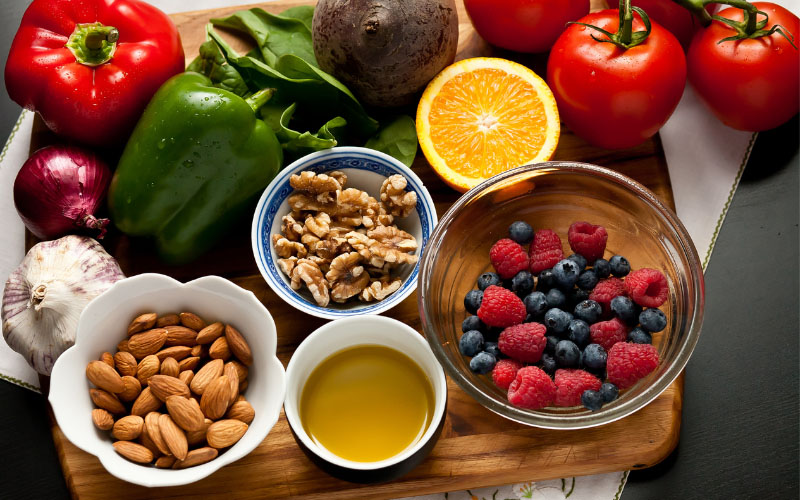
- Plenty of colourful vegetables and fruit, which supply antioxidants that help neutralise inflammatory compounds in the body
- Healthy fats, particularly omega-3s from oily fish, walnuts and flaxseed, alongside olive oil
- Wholegrains over refined carbohydrates, which help keep blood sugar — and the inflammation that comes with blood sugar spikes — more stable
- Lean protein at regular intervals, supporting muscle maintenance and steady energy
- Herbs and spices like turmeric, ginger and garlic, which have well-documented anti-inflammatory properties
- Minimal processed food, since additives, refined sugar and industrial seed oils are among the most consistently inflammatory dietary factors
This is, broadly, the same pattern researchers point to when they study the Mediterranean diet — and it's a way of eating that pays off regardless of your age or life stage.
Why this matters even more from your 40s onward
This matters even more from your 40s onward: declining oestrogen during perimenopause and menopause removes one of the body's natural anti-inflammatory protections, which is part of why weight, energy and sleep can all shift at once. If that's what brought you here, our guide to menopause weight gain explains the mechanism in full, and the Dietlicious Menopause Diet applies these anti-inflammatory principles in a done-for-you meal plan.
Small changes, long-term payoff
You don't need to overhaul your entire diet overnight to start reducing chronic inflammation — small, consistent changes compound over time:
- Swap one processed snack a day for a handful of nuts or a piece of fruit
- Add a serve of oily fish to your week if it isn't already a regular habit
- Choose wholegrain over refined versions of bread, rice and pasta
- Add a vegetable to a meal that currently doesn't have one
- Cut back gradually on added sugar rather than eliminating it all at once
None of these changes need to be extreme to matter. What counts most is consistency over months and years, not perfection over a single week — which is exactly why building an anti-inflammatory pattern into your everyday meals, rather than treating it as a short-term diet, is what actually protects your long-term health.
Frequently Asked Questions
Can an anti-inflammatory diet help with weight loss?
Yes, an anti-inflammatory diet can support weight loss when combined with balanced portions, high-fibre foods, lean protein, and healthy fats, because it encourages nutrient-dense meals that may help manage appetite, energy levels, and healthy metabolism.
Is an anti-inflammatory meal plan good for women over 40?
Yes, an anti-inflammatory meal plan can be a great choice for women over 40 because it supports healthy ageing, energy, weight management, and overall wellbeing. Women who are experiencing perimenopause and menopause typically have lowering oestrogen levels that drive up inflammation in the body, which can cause unwanted weight gain and other unpleasant side effects.
Is the anti-inflammatory diet hard to follow?
It does not have to be. Small, consistent changes like swapping processed meals for wholefoods, adding more vegetables, and choosing healthier fats can make the approach much easier to stick with long term.
Can meal delivery help with an anti-inflammatory diet?
Yes, meal delivery can make an anti-inflammatory diet easier by providing ready-made anti-inflammatory meals, healthy meal plans, and portion-controlled options that save time on shopping, cooking, and meal prep.
Is the anti-inflammatory diet the secret to a long and healthy life?
An anti-inflammatory diet is not a magic fix, but it may play an important role in supporting long-term health, reducing chronic inflammation, and promoting healthy ageing when combined with other healthy lifestyle habits.
How can Dietlicious help?
Dietlicious has created the Menopause Diet meal plan for women who want a convenient meal delivery option without having to plan, shop, or cook every meal. It’s anti-inflammatory menu is designed to support weight management, better energy, mood, sleep, and healthier ageing.
First published: 2022
Updated: September 2026
Written by: Joanna O'Sullivan, Nutritionist (GDHumNutr)
Frequently Asked Questions
Most Recent Posts