Dr Joanna: Does intermittent fasting work for weight loss?
- 26 May 2020

New to intermittent fasting? Start with our guide to how intermittent fasting works.
Is intermittent fasting worth trying?
The practice of fasting for health or spiritual reasons is as old as the hills. Pretty much every religion and many Eastern philosophies, have forms of fasting. Typically fasting is promoted as a means of discipline, reducing gluttony and for focusing the mind.
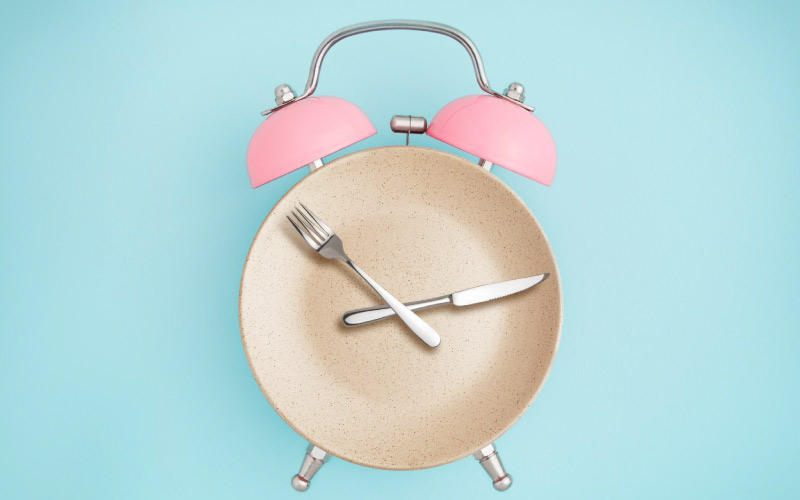
More recently fasting has been promoted as a means to weight loss. The intermittent fasting diet typically involves eating regular, healthy food 5 days a week and fasting on two non-consecutive days. The fasting days can simply involve skipping breakfast that day and eating a regular lunch and dinner.
What the research says
The truth is that research is still in its infancy. What we certainly know from animal studies is that eating fewer kilojoules lengthens the animals’ lifespan and lowers their risk of many chronic diseases including cancer. There is pretty good evidence that this occurs in humans too. It’s just more difficult to test since getting people to survive on lower kilojoule intakes is not easy.
There is also some evidence that fasting has benefits from a health perspective. For example, studies of people at the end of Ramadan has shown improvements in markers of heart disease risk, such as blood cholesterol profiles and insulin sensitivity. Whether this translates into long-term reductions in risk is not yet known, but it certainly looks promising.
There aren’t many published studies yet on intermittent fasting, such as the 5 days eating / 2 days fasting approach. However, at least one study over 6 months showed that fasting on 2 days a week was just as effective as following a reduced-kilojoule diet in overweight or obese premenopausal women1. I’m all for flexibility and based on the research so far, I see the intermittent fasting diet as a viable option for many.
What it's actually like to do
- It teaches you that it is OK to be hungry. That might sound silly, but it’s amazing how many people I speak to who tell me they are rarely, if ever, truly hungry. With food available to us 24/7 it’s common to eat in anticipation of hunger rather than waiting for true hunger pangs to cue you to eat. For those who have tried fasting it is one of the things they almost always tell me – that they really can cope with being a little bit hungry for a day.
- There seem to be benefits for the microbiota – the bugs living inside your gut. By giving your gut a break from the continuous stream of food, the bugs that ‘clean up’ the gut secretions, old cells and so on can thrive and do their job. It seems that fasting helps to ensure a good balance of bugs that do different jobs.
- You don’t seem to overeat the next day. You might expect to be ravenous after a fast day, but in fact most people report finding it easier to stick to a healthy eating plan and not over eat. This may in part be due to the stomach shrinking a little (or not being overly stretched on a daily basis) and so despite feeling like you want to tuck into a big meal, you are satisfied with less. Research backs this up with studies showing that although there is some compensation after a fast, an over kilojoule deficit remains.
- You only need to eat less (admittedly considerably less) on two days instead of every day. Now, this doesn’t mean you can eat whatever you want on the other 5 days! Do that and the approach will almost certainly fail in helping you achieve any weight loss goals. Plus, more importantly you still need to deliver the essential nutrients your body needs for optimum health.
If you want to give fasting a go the important thing to remember is that it does still matter what you eat on the non-fast days. You need to get the bulk of your nutrition on those days after all! So, fasting does not mean you can eat junk food for 5 days and expect good results.
Dietlicious has a few fasting diet plans you can try.
They offer meals for the whole week including the calorie-restricted Fast Days. On the ‘normal days’ as you will have a solid nutritional base each day. You can then add in a few of your favourite foods/drinks and can eat to appetite, while still adhering to healthy eating principles. The menu rotates weekly to provide plenty of variety.
Frequently Asked Questions
Is the 5:2 intermittent fasting diet safe for beginners?
For most healthy adults, easing into intermittent fasting is safe and generally well tolerated — many people find the first week or two the hardest as their body adjusts to going longer without food. Starting with one fasting day a week before moving to two can make the transition easier. As with any change to eating patterns, it's worth checking with your GP first if you're pregnant, breastfeeding, have a history of disordered eating, are managing diabetes, or take medication that needs to be taken with food.
How much weight can you lose on intermittent fasting?
Weight loss results vary from person to person and depend on your starting point, activity level, and what you eat on non-fasting days. Research comparing 5:2 style fasting to standard reduced-calorie diets has generally found similar weight loss outcomes between the two approaches over time — the main difference is how the calorie deficit is achieved, not necessarily the end result.
What can I eat on a fasting day?
On fasting days, the focus is on nutrient-dense, filling foods within a reduced calorie intake — typically lean protein, vegetables, and smart portion control rather than skipping meals altogether. Dietlicious's fasting-day meals are designed to keep you satisfied while staying within that calorie window, so you're not white-knuckling it through the day.
Do I need to fast on the same two days each week?
No — the days don't need to be fixed or consecutive. Most people find it easiest to choose two non-consecutive days that fit around social commitments, such as a Monday and a Thursday.
Can I exercise on a fasting day?
Light to moderate activity is usually fine for most people, though it's sensible to scale back high-intensity training on fasting days, especially while you're still adjusting, and to listen to your body's energy levels.
Is intermittent fasting the same as the 800 Calorie Diet?
Not quite — intermittent fasting (5:2) involves eating normally five days a week and reducing intake on two, while the 800 Calorie Diet restricts intake most or every day. Both use elements of calorie restriction and fasting principles, but suit different goals and levels of commitment.
Dr Joanna McMillan is a PhD-qualified nutrition scientist, author, TV presenter and former brand ambassador for Dietlicious.
First published: May 2026
Last updated: August 2026 by the Dietlicious team to include FAQs.
Reference:
1 Harvie et al. Int J Obes (Lond) 2011 May;35(5):714-27
Most Recent Posts